Olive Garden Lasagna Classico (2026): Is It Actually Worth Ordering?
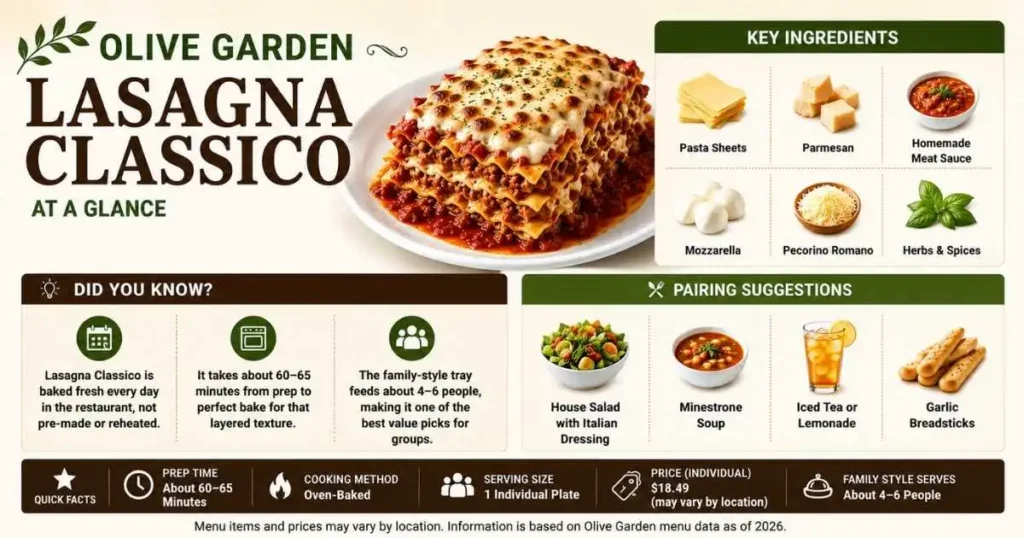
If you have been going back and forth between the Olive Garden Lasagna Classico and something else on the menu, there is usually one thing holding you back: you are not entirely sure what you are actually getting. The menu description does not give much away, but what arrives at your table is a properly baked, layered pasta with homemade meat sauce, pan-seared beef, Italian sausage, and three cheeses: Parmesan, mozzarella, and Pecorino Romano, with a baked top that holds the whole thing together.
At $18.49 for an individual plate, it comes in at 940 calories, which tells you something about how filling it actually is before you take the first bite. Whether you are ordering solo, figuring out if the family bundle covers your group, or just trying to understand what the dish actually delivers, this guide covers everything worth knowing before your order goes in. You can start from the full Olive Garden menu if you are still comparing dishes.
Lasagna Classico Nutrition Facts
Per individual Olive Garden Lasagna Classico serving
Dietary Note: If you want a more detailed nutritional breakdown or need to compare Lasagna Classico with your daily calorie and sodium intake, checking the official Olive Garden nutrition information or a trusted nutrition database can help you make a more accurate meal decision.
What’s Actually Inside Lasagna Classico?
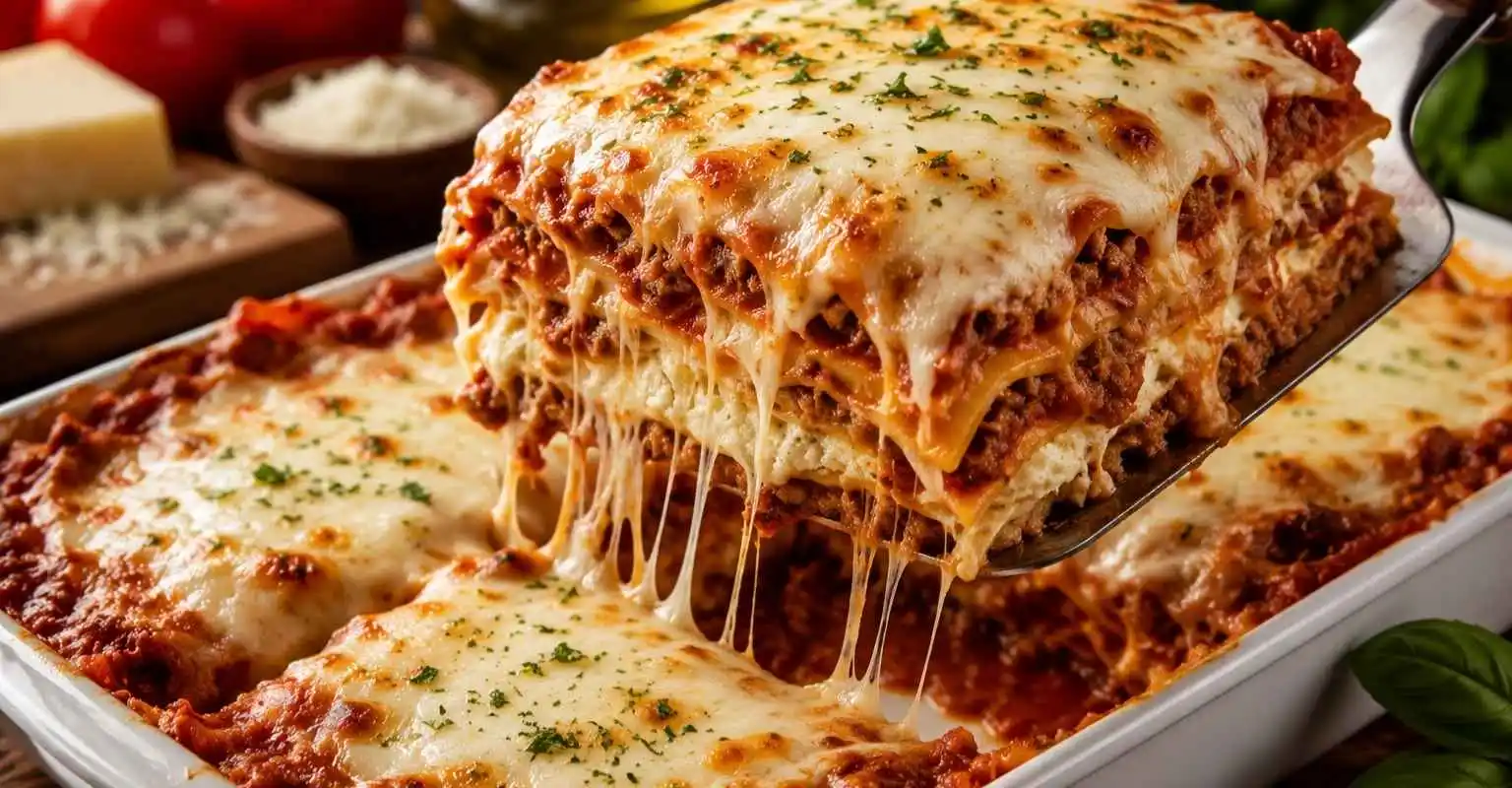
Most pasta dishes arrive as a single layer of components, with sauce on top and protein mixed in. Olive Garden Lasagna Classico is one of the few items on the full entrées list where the structure itself changes how the dish eats. What you are cutting into here is a stacked structure where each forkful cuts through layered pasta sheets, meat sauce, cheese, and a baked top. It does not feel like separate ingredients loosely on your plate. Each layer stays distinct enough that you can feel the structure as you eat through it.
Layer by layer
Baked Top Layer
Mozzarella caramelizes slightly at the surface, firmer around the edges, softer underneath. This is where the firmer top starts giving way to the softer layers underneath.
Cheese Layers
Parmesan, mozzarella, and pecorino romano run through the layers instead of sitting only on top. Pecorino cuts through the richness of mozzarella, so the flavor is not one-dimensional.
Homemade Meat Sauce
Pan-seared beef and Italian sausage work together instead of tasting like a basic tomato sauce with meat added in. The sausage changes the flavor profile enough to add depth to the sauce.
Pasta sheets
Hold their shape through the bake. They do not dissolve into the sauce. Each layer stays distinct enough that you feel the structure as you eat through it.
What this means when you eat it
Each bite is complete
A forkful from the centre compresses all layers together, pasta, sauce, and cheese in one bite rather than separately.
Texture contrast
Crisp baked edges on top, soft layered centre underneath, the contrast is what makes the first few bites different from a regular pasta dish.
Sauce depth
Beef and sausage together create more complexity than a single-protein sauce; you notice the difference without it being obvious why.
Cheese pull
Pull a forkful and the mozzarella stretches rather than breaking clean, a sign the dish arrived hot enough from the oven.
For meal combinations that pair well alongside a heavy main, the lighter Olive Garden lunch meals lists soup and salad options worth checking.
What Makes Olive Garden Lasagna Classico Different From Regular Lasagna?
The difference between what Olive Garden serves and what most people make at home comes down to construction, not just ingredients. The restaurant version is prepared daily using the same layering structure each time, which means layering, baking time, and cheese distribution stay consistent every time it arrives at your table.
| What to compare | Homemade | Lasagna Classico |
|---|---|---|
| Pasta sheet structure | Often softens and collapses into sauce during baking | ✓Holds shape, layers stay distinct when cut |
| Meat sauce depth | Usually single-protein, beef or sausage, rarely both | ✓Pan-seared beef and Italian sausage together |
| Cheese balance | Typically mozzarella only, flat flavor | ✓Parmesan, mozzarella, pecorino romano layered through |
| Baked top layer | Inconsistent, depends on oven and timing | ✓Caramelized mozzarella surface, soft centre underneath |
| Consistency | Varies batch to batch based on how it was built | ✓prepared daily using the same layering approach each time |
Based on Olive Garden menu data. Prices and preparation may vary by location.
Can You Actually Make Olive Garden Lasagna Classico At Home?
Getting close to Olive Garden Lasagna Classico at home is genuinely doable. The ingredients are all accessible, the meat sauce style is straightforward to replicate, and baked lasagna as a format is not technically complicated. If you have made lasagna before, the gap between what you produce and what arrives at the restaurant is smaller than most copycat recipe discussions make it sound.
What usually turns out different
The bigger challenge is not the ingredients; it is consistency. Homemade meat sauce varies depending on how long it reduces and how much liquid remains.
Too much moisture in the sauce causes the pasta layers to absorb more than they should during baking, softening the structure and compressing the layers rather than holding their shape. The result still tastes like lasagna, but the texture feels heavier and less defined than you might expect after cutting in.
Cheese balance is the other variable that shifts at home. Most copycat Olive Garden Lasagna Classico recipes lean heavier on ricotta than the original recipe does, which changes how dense each bite feels. Ricotta adds a creamier texture that mozzarella and pecorino romano do not.
Which ingredients matter most
If you are working from an Olive Garden Lasagna Classico recipe at home, two things make the biggest difference.
First, using both pan-seared beef and Italian sausage in the meat sauce rather than one or the other. The sausage adds a spiced, slightly fattier quality that deepens the flavor in a way beef alone simply does not.
Second, Pecorino Romano is the one ingredient most home cooks leave out, usually because Parmesan feels like the obvious substitute. The problem is that Pecorino tastes sharper and more assertive overall; it pushes back against the richness of the mozzarella in a way that Parmesan simply does not.
Why copycat versions often feel heavier
The most common issue with homemade versions following a copycat Olive Garden classic lasagna recipe is oversized layering. Adding extra layers sounds appealing at first, but they push moisture upward during baking, making slices harder to hold together when served.
Lasagna Classico Ingredients
The honest answer is that homemade lasagna built with the right ingredient balance gets you close. Where the gap usually shows up is in consistency rather than flavor, which comes with practice and attention to sauce thickness and layering, rather than any ingredient you cannot find.
Ingredients and what each one does
| Ingredient | Why it matters |
|---|---|
| Pan-seared beef | Base of the meat sauce. Searing adds depth that boiled or simmered beef does not. |
| Italian sausage | Adds a spiced, slightly fattier quality that changes the overall sauce flavor in a way beef alone cannot replicate. |
| Pecorino romano | Sharpest of the three cheeses. Cuts through the richness and stops the cheese blend from tasting flat or one-dimensional. |
| Mozzarella | Provides stretch and soft texture through the middle layers. Holds the cheese structure together. |
| Parmesan | Adds background saltiness without overpowering. Works quietly through every layer. |
| Lasagna pasta sheets | Should not be over-soaked before assembling. They continue absorbing liquid in the oven. |
| Crushed tomatoes | Sauce base. Needs enough reduction time to remove excess moisture before layering. |
Best Pairings With Lasagna Classico
Lasagna Classico is already heavy enough on its own, so the best pairings are usually the ones that keep the meal balanced instead of adding even more richness halfway through dinner. Those with dietary restrictions can also check the Olive Garden gluten free menu before ordering.
Sides
Lighter sides work better
Soup
Minestrone, not cream-based
Drinks
Lemonade or iced tea
Skip these
What makes it too heavy
If you are thinking about finishing the meal with something sweet, the Olive Garden Desserts menu has a few options worth checking after a heavy main.
What The First Few Bites Taste Like
The first thing you notice about Lasagna Classico is that it feels more baked than saucy. The lightly browned top layer hits first, so the opening bite tastes closer to an oven-finished casserole than a loose pasta covered in sauce.
What hits first
The browned mozzarella near the top gives the first bite a more oven-baked flavor than most Olive Garden pasta dishes, especially around the edges, where the cheese caramelizes slightly.
Where the meat flavor shows up
Beef and Italian sausage do not announce themselves immediately. The baked surface arrives first, and the meat sauce flavor builds gradually as you chew through the layers. By the middle of the bite, the savory depth of the homemade sauce becomes more present.
How the bite changes halfway through
Once you move past the firmer oven-finished top layer, the softer centre layers and deeper meat sauce create a smoother, more savory finish than the opening bite.
Why The Family-Style Lasagna Bundle Works Better For Planned Dinners
This is not the kind of takeout you pick at the last minute. The Family-Style Lasagna Bundle is best when you know guests are coming. You can set the tray in the centre, surround it with salad and breadsticks, and everyone can sit down together instead of sorting out separate orders.
For a full breakdown of available tray sizes and bundle pricing, the Olive Garden family meal page covers every option.
Why the 2-hour notice actually makes sense
The advance notice makes more sense once you realize the order includes a full tray designed for group serving rather than a standard pasta pickup. Instead of regular pasta containers, your order includes a full lasagna tray for 4–6 people, a jumbo house salad, and a dozen breadsticks.
For gatherings beyond 6 people, the Large Group Catering page covers bigger group setups.
The dinner dynamic changes
With individual orders, dinners usually move quickly because everyone eats at different speeds. A lasagna tray changes that naturally. Everyone tends to serve themselves in rounds, go back for another slice later, and the dinner feels less rushed because nobody is finishing at completely different times.
Why baked Lasagna works better for groups
Lasagna also handles group serving more smoothly than many lighter pasta dishes would. Your slices stay together more cleanly while serving, the tray keeps its heat longer during dinner, and someone taking seconds later still gets a properly warm portion.
When it actually makes sense for you
If you are planning a weekend dinner, game night, family visit, or small gathering at home, this setup makes practical sense because everything arrives ready to share. Before placing the order, it helps to confirm your nearest restaurant on the Olive Garden locations page since the bundle requires 2 hours advance notice.
Does Lasagna Reheat Better Than Other Olive Garden Pasta Dishes?
If you normally keep leftovers for the next day, lasagna Classico usually holds up better than many of Olive Garden’s lighter pasta dishes. Since the sauce is baked into the layers instead of loosely coating the pasta, the slices reheat more evenly and stay together without turning watery.
The top layer softens a little after refrigeration, but the overall consistency changes far less than cream-based dishes like Alfredo, where reheating often affects the sauce much more noticeably. If younger diners at your table prefer lighter options, the Olive Garden kids options are worth checking before you order.